Multi-Location SEO: How to Scale Local Growth Across Markets
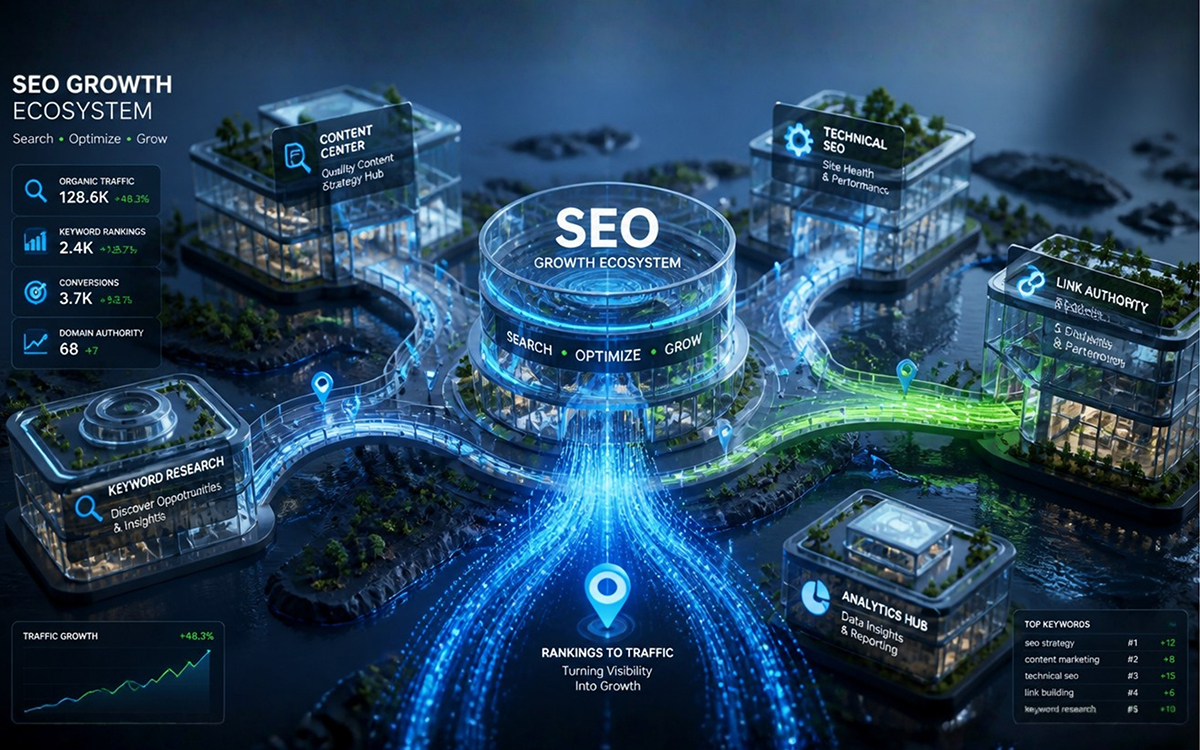
Multi-location SEO is no longer just a technical SEO initiative; it has become a critical growth strategy for businesses operating across multiple cities or regions.
As brands expand, local visibility does not automatically scale with new locations. Without the right structure, businesses often face inconsistent rankings, duplicate listings and uneven performance across markets.
This is where AI-driven SEO strategies, structured local optimization and centralized management systems create a competitive advantage.
Businesses that master multi-location visibility don’t just appear in Google; they dominate every local pack, every map result and every service area they enter.
In this guide, we break down how to scale local SEO, Google Business Profile management and location pages without losing control or performance.
In this guide, you’ll learn how to build a scalable multi-location SEO strategy that improves visibility, consistency and local search performance across every market you serve.
Multi-Location SEO Basics
Understanding how multi-location SEO works is the foundation for scaling visibility across cities and regions.
Growth Complexity
Every new branch increases your SEO footprint. This means more location pages, more Google Business Profile (GBP) listings and more chances for inconsistency. Unlike single-location local SEO, scaling requires structured systems, not just optimization.
Traffic Misconception
More locations do not automatically generate more organic traffic. Without effective geo-targeting, location page optimization and internal linking, businesses can experience keyword cannibalization where branches compete against each other in local search results.
Core Structure
Multi-location SEO depends on two main pillars: optimized location landing pages and fully managed GBP profiles. Both must work together to dominate the local pack and improve visibility.
Marketing + Ops Link
AI-powered search engines increasingly evaluate location relevance, user behavior, review signals and content quality when determining local rankings. Businesses that combine traditional local SEO with AI-ready content and structured data are better positioned to appear in local packs, map results and AI-generated answers.
This strategy sits between marketing and operations. It requires coordination between SEO teams, franchise managers and business systems to maintain NAP consistency and accurate local listings.
Why Established Businesses Struggle to Scale Local SEO Across Many Markets
Most established businesses struggle not because of lack of effort but because of structural SEO issues.
Control Structure Conflict
Centralized branding teams often clash with local branches managing their listings. This creates inconsistencies in NAP (Name, Address, Phone) data and weakens trust signals.
Citation Chaos
Hundreds of local citations across directories become outdated or inconsistent. This reduces authority and impacts local search rankings across regions.
Page Competition
Many brands unintentionally create cannibalization between city pages and service pages. Instead of supporting each other, pages compete in search results.
Duplicate Content Fear
A common myth is that location pages must be entirely unique. This belief leads to hesitation and weak execution, even though structured templates solve this problem effectively.
Step 1: SEO Audit Step
Before scaling, businesses must understand where they currently stand.
Location Mapping
Start by connecting every branch with its correct URL and GBP listing. This ensures every location has a digital identity.
Page Gaps
Next, identify missing or duplicate location pages. Many large websites unknowingly lose traffic due to orphan pages.
Local Visibility
Benchmark each city’s performance in the local pack using grid tools. This reveals real visibility, not just rankings.
Tools
Platforms like Local Falcon, BrightLocal and Semrush help track multi-location SEO performance at scale.
Step 2: SEO Structure
A scalable architecture is essential for long-term growth.
URL System
Use a structured format, such as /locations/city/branch, to support expansion.
This allows clean scaling for hundreds of pages.
Hub Model
Build a hierarchy from corporate → region → city → branch pages.
This strengthens authority flow across the website.
Internal Links
Strong internal linking distributes SEO power evenly and improves local SEO visibility across all branches.
Page Strategy
Small markets can be grouped, while high-demand cities should have dedicated pages for better geo-targeting.
Step 3: Page Optimization
Each location page must feel real, not duplicated.
Unique Elements
Only key elements need to change: address, team, reviews and local services.
This is the “10% uniqueness rule.”
Template System
Use structured templates with flexible blocks for services, hours and testimonials.
Local Proof
Add real photos, customer reviews and community involvement signals to strengthen LocalBusiness schema relevance.
SEO Safety
Avoid doorway page penalties by ensuring each page provides real local value, not just duplicated content.
Step 4: GBP Scaling
Google Business Profile is the heart of local visibility.
Profile Control
Managing hundreds of GBP listings requires structured workflows and verification systems.
Optimization Fields
Each profile must be optimized with correct categories, services and attributes for better local pack performance.
Bulk Management
Large brands should use APIs or tools for bulk updates and consistency.
Engagement Flow
Regular posts, photo updates, review responses and accurate business information help strengthen customer engagement while sending positive relevance and trust signals to Google’s local ranking systems.
Step 5: Citation Control
Consistency across the web builds trust and ranking strength.
Tool Choice
Use tools like Yext, Moz Local, or BrightLocal for managing local citations at scale.
Single Source
Maintain one master database for all location data to ensure NAP consistency.
Location Changes
When branches move or close, updates must be synced immediately to avoid ranking loss.
Duplicate Cleanup
Regular audits help remove duplicate or incorrect listings from directories.
Step 6: Local Content
Content builds authority in each market.
Content Types
Use both local landing pages and blog content depending on intent and funnel stage.
Local Links
Earn backlinks from chambers of commerce, local news and community websites.
Schema Usage
Implement LocalBusiness schema, FAQ schema and structured data across all pages.
Community Signals
Sponsorships, partnerships and participation in local events help strengthen community trust, generate local mentions and improve visibility within specific geographic markets.
Step 7: Tracking System
Without tracking, scaling is impossible.
Dashboards
Use tools like Looker Studio for full visibility across locations.
Rank Tracking
Grid-based tools show real local search rankings per city.
Data Integration
Connect GBP, GA4 and Search Console into one system.
Key Metrics
Focus on calls, direction requests and store visits not just clicks.
Step 8: SEO Governance
Scaling requires structure, not chaos.
Playbook System
Create a clear SEO guide for all branches and managers.
Approval Flow
Control edits to ensure consistency in listings and content.
Training
Teach local teams how to manage reviews and updates properly.
Balance
Maintain brand consistency while supporting local relevance signals.
Common Mistakes
Many businesses fail due to avoidable errors.
- Thin duplicate pages across cities
- Ignoring service-area businesses
- Inconsistent NAP across directories
- Weak content per location
- Treating GBP as static setup
Each of these reduces local SEO performance significantly.
Results Timeline
Multi-location SEO takes time but delivers compounding growth.
- Early Wins
GBP improvements appear in 3–6 months.
- Organic Growth
Full SEO impact appears in 6–12 months.
- Scaling Effect
Well-structured systems create scalable visibility across multiple markets, allowing businesses to expand local reach while maintaining consistency and control.
Multi-location SEO is not just a marketing task; it is a structured system that combines operations, content and technical SEO.
Businesses that succeed in scaling local visibility understand that every branch must be treated as a digital asset, not just a physical location.
This is where Dot IT helps businesses gain a competitive advantage through scalable local SEO systems designed for long-term growth.
With expertise in multi-location SEO, AI-driven SEO, Google Business Profile optimization and scalable marketing systems, Dot IT helps multi-branch businesses unify their digital presence, improve local visibility and achieve consistent growth across every market they serve.
If your business is struggling with inconsistent rankings, weak visibility, or unorganized location pages, it’s time to rethink your strategy.
Ready to scale local visibility across every branch?
Dot IT helps multi-location businesses build structured SEO systems, optimize Google Business Profiles and improve local rankings across cities and regions.
Contact Dot IT today for a multi-location SEO audit and discover where you’re missing growth opportunities. Get a free SEO Audit.
What is multi-location SEO?
Multi-location SEO is the process of optimizing a business’s online presence across multiple physical locations to improve visibility in local search results, Google Maps and location-based searches.
How do I optimize SEO for multiple business locations?
To optimize SEO for multiple locations, create dedicated location pages, maintain accurate Google Business Profile listings, ensure NAP consistency, build local citations and develop location-specific content for each market.
Do I need a separate page for each business location?
Yes. Dedicated location pages help search engines understand the relevance of each branch and improve rankings for local searches in specific cities or service areas.
How long does multi-location SEO take to show results?
Most businesses begin seeing improvements in local search visibility and Google Business Profile performance within 3–6 months, while stronger organic growth typically develops over 6–12 months.
Why is Google Business Profile important for multi-location SEO?
Google Business Profile helps businesses appear in local search results, Google Maps and the local pack. Optimized and regularly updated profiles improve visibility, customer engagement and local rankings.