
Running Ads in Egypt: What to Do Before, During & After Your Campaign
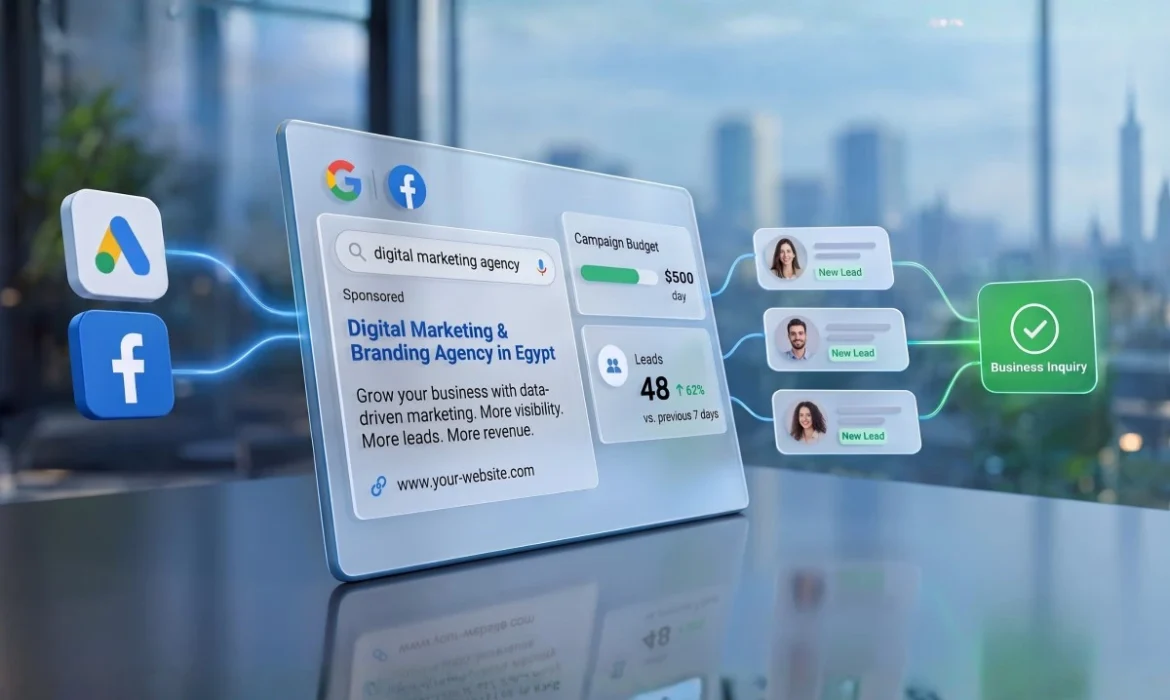
Running Ads in Egypt: What to Do Before, During & After Your Campaign
Turn Insights Into Growth
Let’s discuss your business goals and work together on the right digital strategy to drive measurable, sustainable growth.
- 1Before You Launch: Build the Foundation 2 min
- 2During the Campaign: Run Ads That Convert2 min
- 3After Launch: Measure, Learn and Scale2 min
- 4Dot IT’s Approach to Advertising in Egypt2 min
- 5Make Every Pound of Ad Spend Count 2 min
- 6FAQs2 min
- 7Related Articles2 min
- 8Related Videos2 min
- 9Turn Your Advertising Spend Into Measurable Business Growth2 min

You boosted posts for three months. You tried Google Ads in Egypt for another two. The budget is gone, the reports show thousands of clicks, and the phone has barely rung. Sound familiar?
The problem usually isn’t the platform. It’s what happens before, during, and after the campaign. Ads in Egypt work when the audience, platform, offer and tracking all line up.
This guide is organized around the three phases of every campaign: what to prepare before you launch, what to do while your ads are running, and how to measure and scale after the results come in.
Before You Launch: Build the Foundation
Most campaigns are won or lost before the first ad goes live. This phase covers the market, your audience, your platform choices, your budget, and the tracking you need in place from day one.
Understand the Egyptian Ad Market
Egypt offers advertisers one of the largest online audiences in the region. The country had 98.2 million internet users in late 2025 , and Facebook’s advertising reach alone stood at 51.6 million users, with YouTube close behind.
Three features shape how advertising works here. First, the audience is mobile-first. Egypt had more active mobile connections than people at the end of 2025, so most people will see your ad, and the page behind it, on a phone. Second, conversations matter. Many Egyptian buyers want to ask a question on WhatsApp or Messenger before they commit, so ads that open a chat often outperform ads that lead to a long form. Third, language is a real choice.
Egyptian Arabic often feels warmer and more natural for consumer brands, while B2B and premium brands may mix Arabic and English. The right answer depends on your audience, so test both.
Research Your Audience, Competitors and Seasons
Start with your customer. Where do they live? How old are they? Do they browse in Arabic or English? Which platforms do they actually use? A clinic in Heliopolis and an e-commerce store shipping nationwide need very different targeting.
Next, look at your competitors’ ads. Meta’s Ad Library is a free, public tool that shows the active ads any page is running on Facebook and Instagram. Spend an hour reviewing what competitors offer, how they phrase it, and which formats they use. On Google, search your own key terms and note who appears and what their ads promise.
Then list the search terms your buyers use, in both Arabic and English. Your sales team and customer calls are the best source: the words people use when they contact you are often the words they type into Google.
Finally, map the seasons that affect your business. Ramadan, back to school, summer travel, and major sales events like White Friday bring more advertisers into the auction and change what people are looking for. Plan for them weeks in advance, not days.
Set Objectives and Choose Your Platform Mix
Every campaign needs one clear objective tied to where the buyer is: building awareness, generating consideration, collecting leads, or driving sales. That choice tells each platform what to optimize for.
Then match platforms to the job you need done:
| Platform | Best for | Audience strength | Typical goal |
| Google Search | Capturing people actively searching | High purchase intent | Leads and sales |
| YouTube | Explaining products with video | Broad reach | Awareness and consideration |
| Creating demand at scale | Widest reach in Egypt | Leads, messages, sales | |
| Visual products and lifestyle brands | Younger, visual audiences | Engagement, leads, sales | |
| TikTok | Native, entertaining short video | Younger audiences | Awareness and engagement |
| B2B targeting by role and industry | Professionals and decision-makers | B2B leads |
Most businesses in Egypt get the strongest results from a mix of Google and Meta, using each for the job in the table above, then adding YouTube, TikTok, or LinkedIn once the core campaigns are profitable.
Plan Your Budget and Understand Ad Costs in Egypt
There is no fixed price list for ads in Egypt. Both Google and Meta run auctions, so what you pay depends on how many advertisers compete for the same people and how relevant your ads are.
Google Ads cost in Egypt is driven mainly by competition in your sector and the intent behind your keywords. Real estate, education, healthcare, and finance tend to cost more per click, because many advertisers compete and each customer is valuable. Ad relevance and the quality of the page you send people to also affect your price.
Facebook ads cost in Egypt depends on your campaign objective, the size of your audience, the quality of your creative, and the season. Costs usually rise during Ramadan and major sales periods, when more advertisers compete for attention.
Rather than guessing, run a structured test. Choose one or two platforms, set a fixed test budget, run for two to four weeks, and track cost per lead or cost per sale. Then scale what works and cut what doesn’t. A campaign with a higher cost per click can still be the better choice if it brings customers who actually buy.
Set Up Tracking Before You Spend
Tracking has to be live before the first pound is spent, or the early results are lost. On your website, set up the Meta Pixel, with Meta’s Conversions API where possible, and Google Ads conversion tracking. Decide which actions count as results, such as form submissions, calls, WhatsApp clicks, and purchases, and test each one by completing it yourself.
Planning a campaign around Ramadan or a sales season? Talk to Dot IT early, so your budget, creative, and targeting are ready before costs peak.
A successful advertising campaign is not measured by clicks alone. It is measured by how effectively it turns the right audience into qualified leads and customers.
The Anatomy of a High-Converting Ad Campaign
Understand the essential elements behind an effective campaign, from audience targeting and ad creative to landing pages and conversion tracking.
During the Campaign: Run Ads That Convert
Once your ads are live, every part of the campaign has to work together: platform, targeting, creative, and the path to contact. This phase is also when you watch closely and adjust.
Run Google Ads: Search First, Then YouTube
Start with Search campaigns built around high-intent keywords. Compare “furniture” with “buy office chairs Cairo.” The first is broad and expensive; the second comes from someone ready to buy. Group keywords tightly by topic, write ads that match each group and send each one to a relevant page. Once Search is producing leads at a good cost, add YouTube to reach people earlier and to retarget visitors who didn’t convert.
Run Facebook and Instagram Ads
Choose your campaign objective carefully, since it tells Meta what to optimize for. For many businesses in Egypt, click-to-WhatsApp ads are especially effective: they let interested people start a conversation instantly, which matches how many buyers prefer to shop. Instagram works especially well for fashion, beauty, food, hospitality, and real estate, where strong visuals can sell the offer at a glance.
Add TikTok and LinkedIn Where They Fit
TikTok reaches younger audiences at scale, but it rewards content that looks native to the platform: quick, human, and entertaining rather than polished TV-style ads. LinkedIn costs more per click than most platforms, but for B2B companies, the ability to target by job title, industry, and company size can make a single lead worth far more than the click cost.
Target the Right People
Target only where you can serve. If you deliver in Cairo and Giza, don’t pay to reach Aswan. Add language targeting where it matters. Custom audiences let you reach people who already know you, such as website visitors, customer lists, or people who engaged with your page. Meta’s Lookalike Audiences then find new people who share their traits. Google offers a similar option, Lookalike segments, in its Demand Gen and Video campaigns.
Keep Creative Fresh for Egyptian Audiences
Strong creative grabs attention in the first two seconds, speaks to a clear need, and makes one specific offer. For Egyptian audiences, that often means video, local language, real people, and a reason to act now. Make several versions of each ad, testing different hooks, images, and offers, then keep the winners and replace the rest every few weeks.
Make Contact Easy: WhatsApp, Calls, and Arabic Pages
In Egypt, the click is often the start of a conversation rather than a form submission. Put a WhatsApp button and a click-to-call option where people can see them without scrolling, and make sure someone answers quickly, since a chat left waiting for hours loses the lead. If your ads run in Arabic, the page they open should be in Arabic too. For broader landing page principles, see our guide to performance marketing.
Monitor the First Weeks Closely
The first two to four weeks tell you most of what you need to know. Check daily that spend is pacing as planned. In Google Ads, review the search terms report to see the actual searches triggering your ads, and add negative keywords for the irrelevant ones. On Meta, watch frequency: when the same people see an ad too often, results usually drop and it’s time for new creative. Reply to comments and messages quickly, since slow replies waste the interest your ads created. Avoid changing everything at once. Adjust one thing at a time, so you can see what made the difference.
From Ad Clicks to Business Results
Ad Clicks
People who interact with your advertisement.
Enquiries
People who contact your business through forms, calls, or WhatsApp.
Qualified Leads & Customers
Enquiries that match your target audience and have genuine buying potential.
After Launch: Measure, Learn and Scale
When the test period ends, the data tells you where to put the next pound. This phase turns results into decisions.
Read Results From Click to Customer
Start with the actions you set up before launch: how many forms, calls, WhatsApp chats, and purchases each campaign produced, and what each one cost. Compare campaigns by cost per lead and cost per sale, not by clicks or reach.
Give Automated Campaigns the Right Signals
Google and Meta now rely heavily on automated campaign types, which learn from the conversions you report (our performance marketing guide explains how they work) . In Egypt, where so many sales start on WhatsApp or by phone, untracked chats and calls mean the platforms can’t see your best leads. They then optimize toward whatever they can measure, such as clicks. Recording WhatsApp conversations and calls as conversions gives automation the right signal.
Connect Leads to Sales
A lead isn’t a customer yet. Ask your team to record where each customer came from, or use a CRM that links leads to campaigns. Then you can see customer acquisition cost and return on ad spend, the numbers that show which campaigns actually grow the business.
Avoid Common Measurement Mistakes
Watch for three mistakes. Tracking clicks instead of conversions hides whether ads bring customers. Treating every lead as equal ignores that some campaigns bring far better buyers. And ignoring sales that close on WhatsApp or by phone makes strong campaigns look weak.
Scale What Works
Once a campaign brings customers at a cost you’re happy with, increase its budget gradually rather than doubling it overnight, so the platform can adjust without losing efficiency. Pause or rework campaigns that don’t meet your target. Reuse winning offers and creative angles on other platforms, and feed what you learned into planning for the next season.
Dot IT’s Approach to Advertising in Egypt
We know how Egyptian audiences browse, chat, and buy, and we build campaigns around it. Our team plans around local seasons like Ramadan and White Friday, writes ad creative in Arabic and English, and sets up campaigns across Google, Facebook, Instagram, TikTok, and LinkedIn based on what each platform does best for your business.
We also make sure WhatsApp chats and calls are counted as results, not lost, so you can see which campaigns bring real customers. When the page behind an ad is holding results back, our web team builds a better one.
Whether you need a full advertising team or help with one part of the process, such as creative, targeting, or tracking, we’ll shape the work around what your business needs.
Make Every Pound of Ad Spend Count
Advertising in Egypt can bring customers quickly when every phase gets attention. Prepare before you launch, watch and adjust while ads run, and use the results to decide where your next budget goes.
Want your next campaign to bring customers, not just clicks? Get in touch with the advertising team at Dot IT.
Get the Egypt Paid Campaign Readiness Checklist (PDF)
A practical checklist to help businesses prepare, launch, and measure advertising campaigns in Egypt.
FAQs
How much do online ads cost in Egypt?
There is no fixed price, because Google and Meta both use auctions. Costs vary by industry, audience, ad quality, and season. A two to four week test with a fixed budget is the most reliable way to find your real cost per lead.
Which is better for advertising in Egypt: Google Ads or Facebook Ads?
If people already search for what you sell, start with Google Ads. If your product needs to be discovered or shown visually, start with Facebook and Instagram. Once one channel is profitable, adding the other usually brings more customers at a similar cost.
How much do Facebook ads cost in Egypt?
There is no standard rate, but you can get a rough starting point before spending: Meta’s Ads Manager shows estimated daily results as you set your audience and budget. Real costs only become clear once a campaign runs, so judge them by cost per lead or sale.
Can small businesses afford online advertising in Egypt?
Yes. Both platforms let you set a daily or total budget. Small businesses often get the best start with one platform, one tightly defined area, and click-to-WhatsApp or call campaigns that turn interest into conversations quickly.
How do I know if my ads are working?
Look at how many leads and customers each campaign brings and what each one costs. If you sell through WhatsApp or by phone, ask every new customer how they found you until those conversations are tracked automatically.
Related Articles





Related Videos
Ready to Get More from Your Ad Budget?
Turn Your Advertising Spend Into Measurable Business Growth
Reach the right audience, generate qualified leads, and understand what your campaigns are delivering. Let Dot IT help you build a performance-focused advertising strategy for your business in Egypt.


